

EFFECTS OF WAVE HEIGHT ON CRANE LIFT CAPACITY
Higher waves reduce crane lift capacity. For floating crane bases, this is due to motion imparted on the crane. For off-board lifts, even for bottom-supported bases, waves also impart motion to the cargo (via the workboat). Additionally, the workboat will drift due to wave strikes causing higher offlead and sidelead horizontal forces on the crane. Furthermore, higher hook speeds are required to ensure that a workboat will not strike the cargo after the cargo is lifted. Higher hook speed plus higher crane boom tip speed increases the impact loading.
Hs, THE SIGNIFICANT WAVE HEIGHT
For a given sea state, the size of waves varies considerably. The wave size used for crane rating purposes is the average of the highest 1/3 of the waves in a given sample. This statistical wave height is given the name 'significant wave height' and the symbol Hs.
APPROXIMATE RELATION OF Hs TO SEA STATE AND WIND SCALES
The following are anecdotal information and links which may be useful. Note that the purchaser is responsible for providing the appropriate sea state, in the form of Hs, for the particular project.
Hs, wikipedia Beaufort scale, wikipedia Douglas scale, wikipedia*In the chart below, Hs is referred to as "probable wave height in metres".

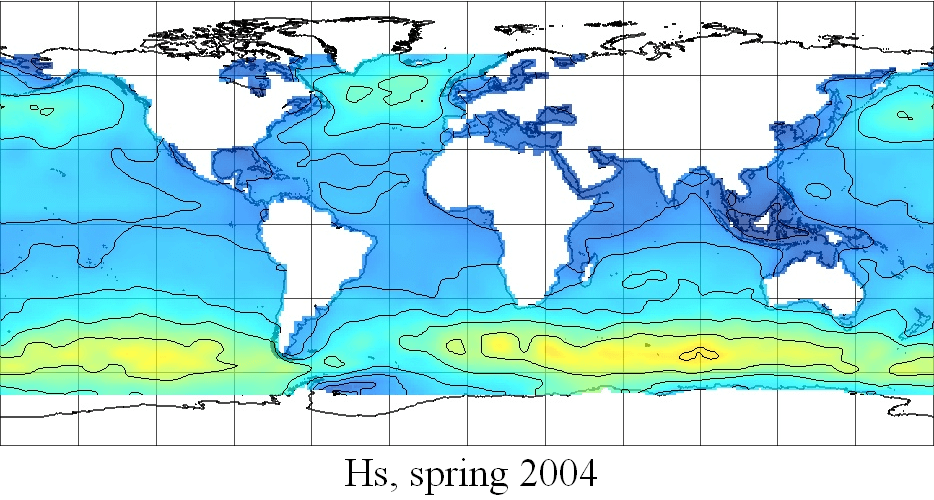
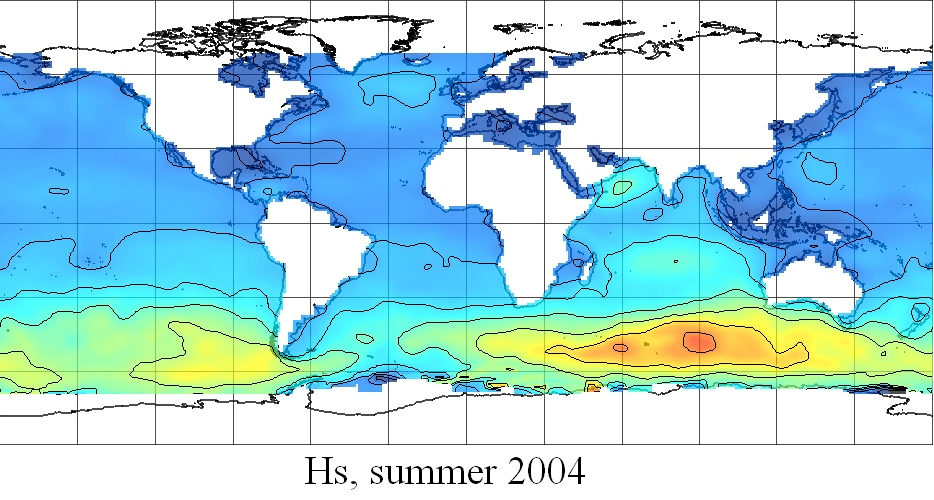
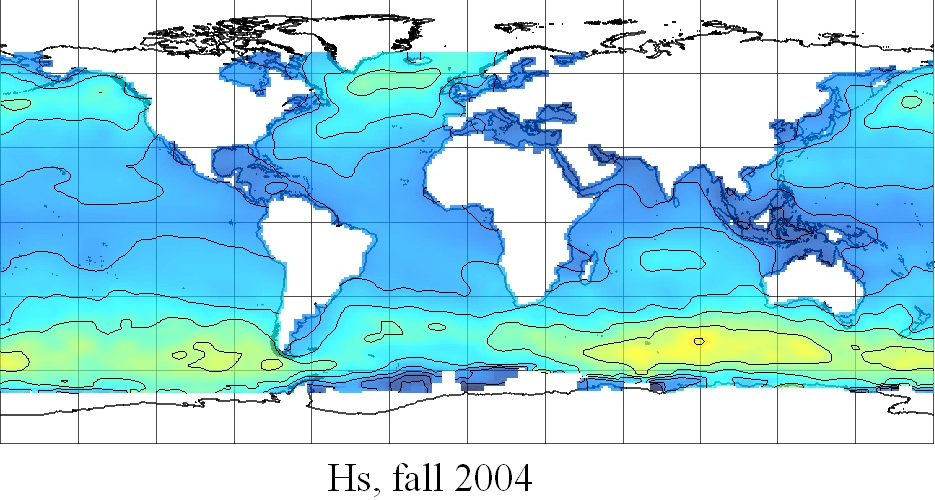
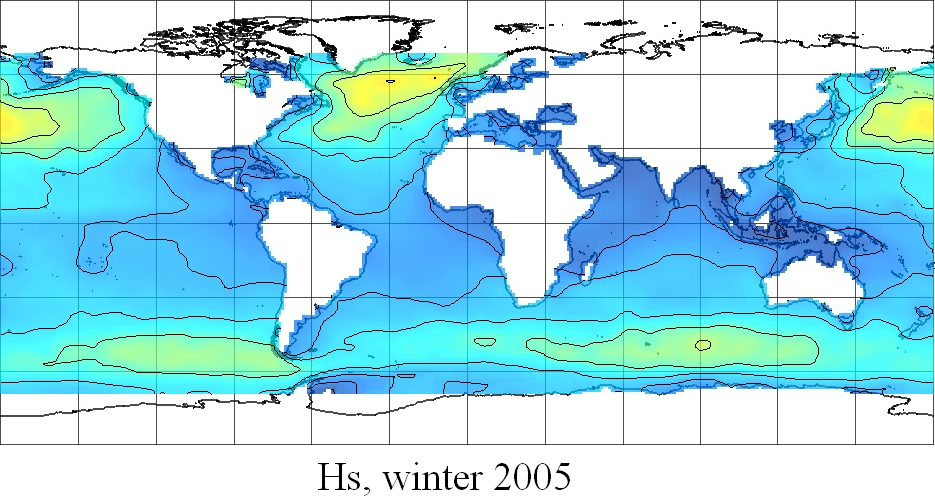
SOME SATELLITE DATA ON GLOBAL SEASONAL Hs
The following is anecdotal information. The purchaser is responsible for providing the appropriate sea state, in the form of Hs, for the particular project.